The Circle: Ole Miss Tailgating at the Center of Campus
The Grove’s quieter, more historic neighbor at the top of campus.
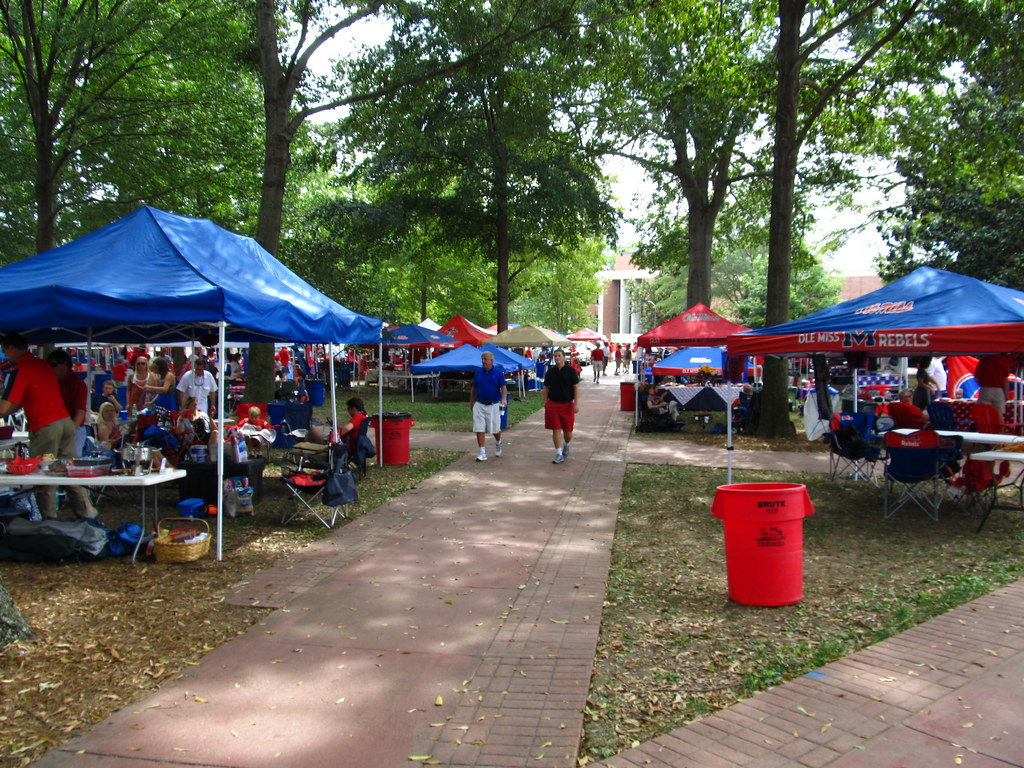
Walk through both The Circle and the Grove to experience the complete Ole Miss tailgating tradition. Expect dense crowds, limited vehicle access and changing setup rules. Use campus shuttles or walk whenever possible, and confirm current policies before planning a private tailgate.
On an Ole Miss football Saturday, most visitors hear one name before they ever reach Oxford.
The Grove.
It is the famous one. The nationally televised one. The place associated with chandeliers beneath tents, carefully arranged food spreads and thousands of fans dressed for something closer to a garden party than a football game.
But just beyond the Grove sits another important piece of the Ole Miss gameday experience.
The Circle.
Surrounded by some of the university’s most recognizable buildings, The Circle offers a more historic and campus-centered setting for tailgating. It shares the pageantry, hospitality and red-and-blue energy of the Grove, but the atmosphere can feel slightly more established, more family-oriented and more connected to the physical heart of Ole Miss.
The Grove may receive most of the headlines.
The Circle feels like the front porch of the university.
The Kind of Place That Defines Ole Miss
The Circle is one of the most recognizable spaces on the University of Mississippi campus.
At its center stands the flagpole, surrounded by broad lawns, mature trees, sidewalks and historic academic buildings. The Lyceum, with its white columns and deep connection to the university’s history, gives the area a sense of importance that goes beyond football.
During an ordinary week, students cross The Circle on their way to class. Campus tours stop for photographs. Visitors pause to take in one of the university’s signature views.
On a home football Saturday, the landscape changes.
Red, blue and white tents appear across the grass. Tables fill with food. Families, alumni and longtime Rebel supporters gather beneath the trees. Music carries between tents while the crowd moves back and forth between The Circle and the Grove.
It remains one of the university’s most historic spaces.
It just becomes a much louder one.
The Circle Versus the Grove
Visitors frequently treat The Circle and the Grove as though they are the same place.
They are closely connected, but each has its own personality.
The Grove is larger, denser and more internationally recognized. Its endless rows of tents create the feeling of an enormous outdoor party. Student groups, television stages and the Walk of Champions bring constant movement through the area.
The Circle can feel more composed.
Its location around the historic center of campus gives it a slightly more traditional atmosphere. Tailgates often include families, established alumni groups and guests who have returned to the same general area for years.
That does not mean The Circle is quiet.
On a major SEC weekend, it can be packed.
The difference is more about tone than volume. The Grove feels like the biggest party in town. The Circle feels like an Ole Miss reunion held in one of the university’s most meaningful spaces.
Neither experience is necessarily better.
A complete gameday should include both.
This Is Still Ole Miss Tailgating
Do not expect folding chairs surrounding the back of a pickup truck.
Tailgating around The Circle follows the broader Ole Miss standard.
Tents may include tablecloths, flowers, serving dishes, televisions and decorations selected specifically for the opponent. Some hosts bring out chandeliers, framed photographs, rugs and enough coordinated décor to make the space feel like a temporary outdoor dining room.
The food receives the same attention.
Fried chicken, barbecue, dips, sandwiches, casseroles and Southern appetizers may fill the table. Larger groups often use caterers or professional tailgate services to handle setup, furnishings and cleanup.
This is hospitality with operational discipline.
The goal is not simply to have enough food before the game. The goal is to create a place where friends, relatives, clients and unexpected visitors can spend most of the day comfortably.
At Ole Miss, the tailgate is not a warmup.
It is the main social event.
Dress Like You Planned to Be There
The Circle is not the place to arrive looking as though you stopped by after mowing the lawn.
Ole Miss gameday attire is part of the tradition.
Men commonly wear button-down shirts, polos, khakis, sport coats or elevated team apparel. Women often choose dresses, boots, skirts or carefully coordinated red-and-blue outfits.
The level of formality changes with the weather, kickoff and opponent, but the baseline remains higher than at most college football tailgates.
You do not need to wear a suit.
You should look like you made a decision.
Comfort still matters. The day may include significant walking, changing temperatures and hours spent standing on grass. Shoes should survive the campus even if the rest of the outfit is built for photographs.
The best strategy is polished but practical.
The Circle rewards both.
How to Experience It Without Your Own Tailgate
First-time visitors sometimes worry that they cannot enjoy Ole Miss tailgating unless they know someone with a tent.
A personal invitation certainly improves the experience, but it is not required to see what makes The Circle special.
Walk through the area slowly. Take in the historic setting, the decorations and the scale of the gathering. Ole Miss fans are known for hospitality, and friendly conversation can open doors quickly, especially when visitors are respectful and genuinely interested in the tradition.
Do not walk into a private tent and immediately begin eating.
That is not Southern hospitality.
That is theft with better clothing.
Introduce yourself. Mention that it is your first visit. Ask about the setup, the food or how long the group has been tailgating there. Many fans take pride in explaining the tradition and welcoming guests, including supporters of the visiting team.
The key is to act like a guest rather than a customer.
Bring Less Than You Think
The Circle is best experienced on foot.
Large bags, bulky coolers and unnecessary equipment quickly become liabilities when moving through a crowded campus. Unless you have a dedicated tailgate location, keep the load light.
Bring the basics:
A charged phone.
Portable power.
Weather protection.
Comfortable shoes.
A clear understanding of where the group will meet if cellular service becomes unreliable.
Campus crowds can make communication difficult. Pick a recognizable landmark before everyone separates. The flagpole, the Lyceum or another fixed campus feature works better than promising to meet “near the red tent.”
There will be thousands of red tents.
That plan has no scalability.
The Historic Setting Matters
What separates The Circle from a generic tailgating lawn is the environment surrounding it.
The Lyceum anchors the space and connects the football celebration to nearly two centuries of university history. Other historic buildings frame the lawn, giving visitors a strong sense that they are standing at the center of Ole Miss rather than in an event lot beside a stadium.
That setting creates an unusual contrast.
Tailgate music plays beside academic buildings. Cocktail tables stand near pathways students use throughout the week. Generations of alumni gather in places they crossed daily when they attended the university.
For returning graduates, The Circle is not simply convenient real estate.
It holds memory.
That emotional connection helps explain why families return to the same areas year after year and why tailgating locations can become part of an Ole Miss identity passed from one generation to the next.
When to Arrive
The Circle deserves more than a quick walkthrough on the way to the stadium.
Arrive early enough to watch the atmosphere build. The experience changes throughout the day as tents fill, food appears and the crowd grows more animated.
Earlier in the day, The Circle feels social and relaxed. Families visit between tents. Children move around the lawn. Hosts make final adjustments to their setups.
As kickoff approaches, the energy tightens.
More people begin moving toward the Grove, the Walk of Champions and Vaught-Hemingway Stadium. Conversations become shorter. Televisions draw larger groups as other SEC games reach critical moments.
Eventually, the entire campus begins leaning toward football.
That progression is worth experiencing.
Do not arrive so late that the only thing you see is everyone packing up to enter the stadium.
Respect the Rules and the Space
Tailgating at Ole Miss operates under university rules designed to protect the campus and manage a massive crowd.
Policies may govern setup times, tent placement, open flames, generators, alcohol containers, commercial vendors and vehicle access. Procedures can also change from one season to the next.
Check the university’s current gameday guidance before arriving or arranging a setup.
The Circle is not an ordinary parking lot. It is an active, historic part of campus, and preserving the lawn and surrounding areas is part of keeping the tradition alive.
Clean up after yourself.
Respect other tents.
Keep walkways open.
Do not treat the university grounds like a disposable festival site.
The pageantry only works when the place still looks like a campus after everyone leaves.
Families Fit Naturally Here
The Circle is one of the strongest areas for families wanting to experience Ole Miss tailgating.
The historic setting, open lawn and generally established crowd create a welcoming environment for children, parents and older relatives. It can feel slightly less compressed than the busiest sections of the Grove, though major games still produce significant crowds.
Families should still prepare for long walks, changing weather and limited access to supplies once campus becomes packed.
For younger visitors, The Circle also provides space to understand Ole Miss beyond football. The buildings, traditions and campus landmarks create a broader sense of the university.
This is where a child may attend a tailgate for the first time.
Years later, that same child may return as a student or alumnus and set up a tent of their own.
That continuity is the real tradition.
Why The Circle Belongs in the Oxford Experience
The Grove shows visitors why Ole Miss tailgating became famous.
The Circle helps explain why it matters to the people who return every season.
It combines football, history, family and university identity in one setting. The tents may disappear after the weekend, but the relationships tied to those spaces remain.
That is why calling it simply a “tailgating spot” feels incomplete.
The Circle is a gathering place.
It is where alumni reconnect with the university. It is where visiting fans receive their first lesson in Ole Miss hospitality. It is where the campus itself becomes part of the football experience rather than merely the route to the stadium.
The party is important.
The place underneath it is even more important.
The Verdict
The Circle should be part of every first-time Ole Miss football weekend.
Walk through before the crowd reaches its peak. Notice the Lyceum and the historic buildings surrounding the lawn. Talk with fans. Appreciate the food, clothing and decorations, but also pay attention to the generations gathering beneath the same trees.
Then continue into the Grove and toward Vaught-Hemingway Stadium.
The Grove delivers the spectacle.
The stadium delivers the game.
The Circle connects both of them to Ole Miss itself.
The Circle: Ole Miss Tailgating at the Center of Campus
More in Oxford
View All
The Grove: The Center of the Ole Miss Gameday Universe
Ten acres of oaks, chandeliers under canvas and the Walk of Champions through the middle. The standard everything else is measured against.
- The Grove
- The Grove sits in the center of campus and is approximately a 10- to 15-minute walk from Vaught-Hemingway Stadium, depending on your location and crowd levels.